
Otter Surveys
Why Do You Need an Otter Survey?
Otters Lutra lutra are protected under the Wildlife and Countryside Act 1981. It is illegal to kill, injure or disturb the species and to damage, destroy or obstruct access to a place used by otters for shelter or protection.
Any development project that could affect otters requires a survey report and, if appropriate, mitigation plans. Surveys need to show whether there are any otters present in the area, or nearby. The survey will also detail how the otters are using the site. Mitigation plans will need to display how the development project will avoid, reduce or manage any negative effects it may cause to this species.
Any project which potentially could harm this species should aim to avoid:


Work on or near the water body and known otter habitat
Disturbance effects, e.g. by leaving a buffer zone along a river
Night works
If appropriate, an otter mitigation licence can be applied for from Natural England or Natural Resources Wales.

When to Carry Out a Survey
The best time to carry out an otter survey is during their breeding season when they are at their most active and most visible. However, otters can be successfully surveyed for all year round.
Surveying for otters uses a systematic methodology, checking prominent habitat features such as islands, headlands and inlets. Within these areas, suitable features including rocks, logs and tussocks are investigated for signs of spraints (otter dung). Specifically, the visual survey looks for:


Animal sightings/tracks
Evidence of underground dens (holts)
Spraints (dung)
Feeding remains
Footprints
Couches (above ground sites where otters rest during the daytime)
Take a look at our survey calendar for more information.

What Will Pioneer Supply?
The report we produce will present both survey results and a summary of the legal implications of otter presence or absence. If required, mitigation recommendations will be designed to assist your planning application whilst ensuring that conservation measures are in place to protect this vulnerable species. The main areas of our surveys focus on (i) what kind of impacts the project might have on otters, and (ii) how these impacts will affect the local otter communities.

About Otters
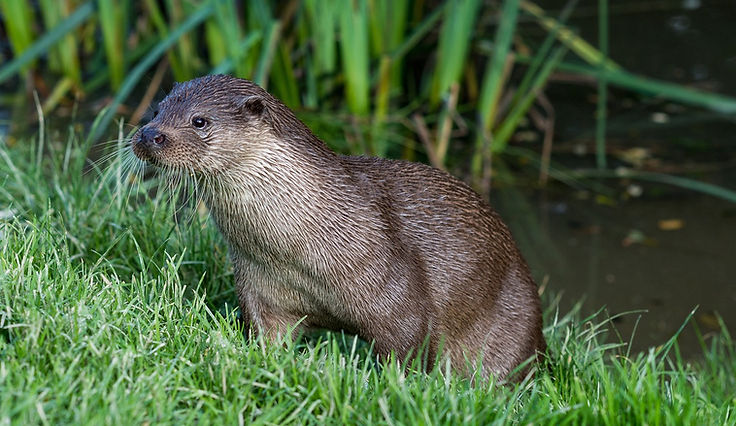
Otters are members of the weasel family, with only one species found in the UK - the Eurasian otter, Lutra lutra. Otters usually have large territorial hunting grounds, with some ranging up to 20km along a river to hunt for food. Following a sharp decline throughout Britain in the 1950s-1960s, populations of otters became fragmented and are only now beginning to slowly increase locally.
For more information on surveys, download our otter factsheet.